How Do You Evaluate Beer Brewing Equipment Quality?
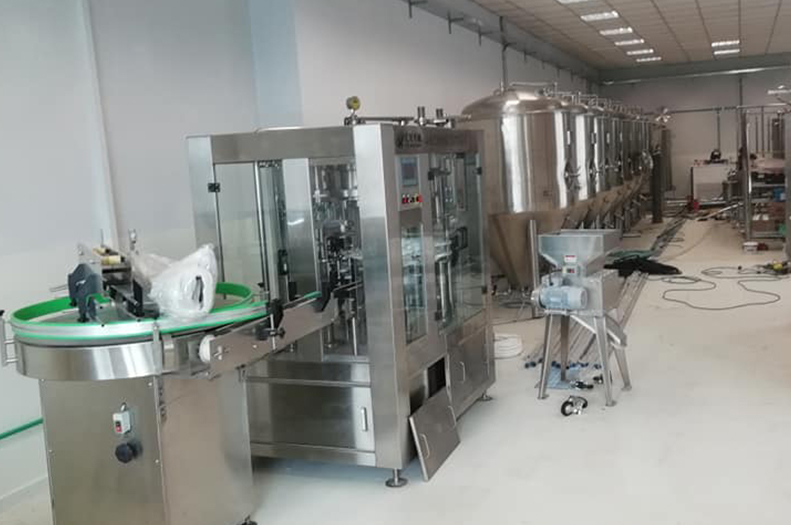
High-quality beer brewing equipment is evaluated by measurable construction and operating details, not by appearance or tank capacity alone. Check the stainless-steel grade, material certificates, wall thickness, weld finish, internal surface roughness, drainage, pressure rating, cooling-jacket design, instrumentation, and CIP coverage. A sanitary product-contact surface is commonly specified at Ra ≤0.8 µm in 3-A and EHEDG guidance. Pressure vessels should be designed, inspected, and tested under the applicable code and local rules. Compare pump duty, heat-exchanger capacity, temperature control, valve design, and component brands against the brewery’s required flow rates and temperatures. Factory inspection should verify 100% of agreed critical specifications before shipment.
The first check is the material specification. A quotation that only says “stainless steel” is incomplete because product-contact areas, jackets, frames, and external panels may use different grades. Ask for the exact grade, thickness, finish, and material documentation for each wetted part. For a large tank, the shell, heads, ports, manways, fittings, and internal tubes should be listed separately rather than grouped under one material line.
304 stainless steel is common in food and beverage equipment, while 316/316L is used where additional corrosion resistance is required. The grade alone does not establish equipment quality. The buyer should compare the specified grade with the cleaning chemicals, chloride exposure, temperature range, and intended service. A 2025 equipment specification should also state whether material certificates are required for all product-contact sheets or only selected components.
| Item to verify | What to request |
|---|---|
| Stainless grade | 304, 316L, or specified equivalent |
| Sheet thickness | Shell, head, jacket and cover |
| Surface finish | Defined Ra value |
| Documentation | Material certificate and heat number where required |
| Fittings | Product-contact material and seal material |
Material verification leads naturally to fabrication quality because the same stainless sheet can produce very different results depending on how it is cut, formed, welded, polished, and cleaned. Look at the inside of the vessel rather than relying on exterior photographs. In a practical inspection, examine 100% of accessible product-contact welds on tanks receiving fermented beer, including ports, racking arms, thermowells, outlets, manways, and CIP fittings.
Welds should be smooth and free from visible cracks, pits, crevices, excessive undercut, and rough transitions. Welding procedure qualification and inspection requirements can be tied to applicable pressure-vessel or fabrication standards. ASME BPVC Section IX addresses welding qualifications, while Section VIII covers pressure-vessel construction requirements. A supplier that cannot identify the welding procedure, inspection method, or finished-surface requirement leaves an important part of the specification undefined.
Surface finish needs its own measurement. 3-A Sanitary Standards states that sanitary fabrication criteria generally call for surfaces at or smoother than 32 µin. (0.8 µm) Ra and address pits, folds, crevices, radii, drainage, accessibility, and cleaning method. EHEDG guidance also uses 0.8 µm Ra as a common limit for product-contact surfaces intended to be cleanable.
A visual “mirror finish” is not enough. A profilometer can measure surface roughness at selected points, and the inspection plan can define the number and location of readings. For example, a purchaser may require measurements on 3 representative weld zones plus 3 flat-surface areas on each tank size. That creates a record that can be compared with the agreed specification instead of relying on appearance alone.
A smooth-looking tank can still have rough welds, pits, or poor transitions where cleaning fluid reaches the surface less effectively.
That inspection leads to sanitary geometry. Tank bottoms should drain properly, outlet piping should avoid unnecessary liquid pockets, and valves should be accessible for cleaning and service. The Brewers Association describes CIP as a process for cleaning interior equipment surfaces without major disassembly and notes that CIP involves chemical, temperature, and pressure hazards.
For a CIP-capable vessel, ask for the spray device type, coverage arrangement, flow requirement, pressure range, and cleaning circuit. Do not assume that a spray ball automatically provides complete coverage. The equipment design should match the cleaning method, chemical concentration, temperature, flow, and contact time specified by the brewery. In a 2024 Brewers Association safety session, CIP was discussed as requiring equipment rated for the actual temperatures, pressures, and chemicals used.
Drainability also deserves a physical check. After a cleaning cycle, the tank should not depend on manual wiping to remove standing liquid from ordinary product-contact areas. Inspect the lowest outlet, valve orientation, piping slope, and transition points. EHEDG certification examples specifically consider drainability, surface roughness, crevice-free construction, and cleanability testing when assessing hygienic equipment.
Pressure service changes the inspection method again. Fermentation and bright beer tanks commonly operate under pressure, so the purchase specification should state working pressure, design requirements where applicable, safety-device requirements, and test requirements. ASME BPVC Section VIII provides rules for pressure-vessel design and construction, while Section XIII addresses overpressure protection. The 2025 edition includes inspection and certification provisions for pressure vessels.
The pressure rating should be consistent across the vessel and its connected components. A tank may have a specified working pressure while a valve, gauge, sight glass, fitting, or flexible connection has a lower rating. Review the full pressure path rather than checking the tank nameplate alone. Record test pressure, test date, instrument used, and acceptance result for each pressure-rated vessel.
Cooling performance should also be described with numbers. A fermentation tank supplier should provide the cooling-jacket configuration, jacket area, connection size, operating pressure, insulation specification, and expected cooling duty under stated conditions. “Fast cooling” is not a useful specification without a product volume, starting temperature, target temperature, glycol temperature, and required time.
For example, a buyer could specify a 20 hL working volume, a defined starting temperature, a target temperature, and a maximum cooling period, then ask the supplier to demonstrate how the jacket area and glycol flow support that requirement. This turns a marketing statement into a testable engineering requirement. The same approach applies to wort chilling and hot-liquor heating.
Temperature measurement then becomes part of the same chain. Check sensor type, location, calibration method, response time, and replacement access. A tank using one sensor near the top may not represent the average liquid temperature in every process. For automated systems, inspect the sensor-to-controller-to-valve loop and confirm what the system does if the sensor fails.
Control panels should be reviewed as engineered assemblies rather than cabinets full of branded components. Record the PLC model, HMI model, electrical protection, pump starters or variable-frequency drives, valve solenoids, temperature controllers, and communication interfaces. A supplier that provides component model numbers gives the brewery a way to identify replacements years later. A 2025 parts list should not contain entries such as “motor, 2 units” without manufacturer and model data.
Pumps deserve the same level of detail. Motor power alone does not describe pump suitability. Ask for the expected flow rate and head at the actual operating point, then check wetted materials, seal type, temperature range, and CIP compatibility. A pump selected for wort transfer may not be the right choice for yeast handling or chemical circulation.
Heat exchangers should be checked against operating conditions rather than plate count alone. Request design flow, wort inlet and outlet temperature, cooling-medium inlet temperature, target outlet temperature, allowable pressure drop, and connection sizes. These values can be compared between suppliers without relying on vague claims about capacity. For a system with 2 stages, review each stage separately because the two circuits can have different duties.
The same comparison method works for valves and fittings. List the valve type, internal diameter, connection standard, seal material, product-contact material, actuator type, and service purpose. For sanitary systems, 3-A guidance addresses smooth surfaces, drainage, accessible cleaning, and the integrity of sealed surfaces. The supplier should identify where seals are installed and which materials are exposed to hot wort, beer, cleaning chemicals, or steam.
Equipment layout affects how well the specifications can be used in production. Review approved drawings for tank height, diameter, manway clearance, pipe routing, platform access, drain location, electrical connections, glycol piping, steam connections, and maintenance space. A tank can meet its individual dimensions and still fit badly into the brewery if a manway opens into a wall or a service panel cannot be reached.
A factory acceptance test should therefore cover more than dimensions. Prepare a written inspection sheet and check the vessel against the approved drawing, component list, and contract. A practical FAT can verify material labels, welds, surface finish, valves, pumps, sensors, control logic, alarms, drain points, pressure tests, and documentation. Record each result as pass, fail, or correction required.
A purchase specification becomes much easier to enforce when every important item has a stated measurement, document, test, or inspection method.
Documentation should remain part of the inspection package. Request P&IDs, electrical schematics, vessel drawings, equipment manuals, component datasheets, calibration records, pressure-test reports, recommended spare parts, PLC backups, and maintenance instructions. The Brewers Association also maintains technical resources on cleaning, sanitation, draught systems, and production equipment, including material on CIP and sanitary transfer systems.
Supplier comparison is easier with a line-by-line table:
| Category | Supplier A | Supplier B |
|---|---|---|
| Tank material | Grade + certificate | Grade + certificate |
| Product-contact finish | Ra value | Ra value |
| Welding | Procedure + inspection | Procedure + inspection |
| Working pressure | Defined value | Defined value |
| Cooling | Jacket area + duty | Jacket area + duty |
| Pump | Flow + head + model | Flow + head + model |
| Controls | PLC/HMI models | PLC/HMI models |
| FAT | Written procedure | Written procedure |
| Documentation | Full list | Full list |
A line-by-line comparison also makes price differences easier to understand. One quotation may include installation, commissioning, controls, spare seals, calibration, factory testing, and drawings, while another may exclude several of those items. The difference should be recorded rather than assumed. A procurement review completed in 2025, for example, can require every unlisted item to be marked “excluded” before the commercial comparison is finalized.
For breweries comparing Brewing Equipment, the inspection process can be kept practical: confirm material, measure finish, inspect welds, verify pressure, test cooling, check CIP coverage, review controls, confirm component models, and document the FAT. Using the same checklist for every quotation makes technical differences easier to see.
One final check is maintainability. Ask how a valve seat, mechanical seal, temperature probe, pump, or solenoid is replaced and how much surrounding equipment must be removed. Record standard spare-part sizes and manufacturer numbers. A brewery that keeps 5 critical spare categories on site may restore service more quickly than one that must identify a proprietary part after a failure.
Equipment quality is therefore measurable at several levels: material certificates, 0.8 µm Ra surface requirements, qualified fabrication, pressure documentation, cooling specifications, component records, CIP design, factory testing, and complete technical documentation. A supplier should be able to describe these items with numbers, drawings, model numbers, and test records rather than relying mainly on photographs or general claims.