What Are the Best Materials for Wholesale Coffee Packaging?
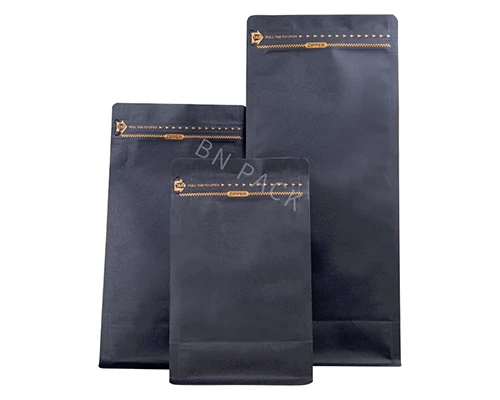
For wholesale coffee packaging, the material should be selected by barrier performance, filling requirements, shelf-life target, and disposal system rather than appearance alone. Aluminum foil laminates provide very strong protection from oxygen, moisture, and light; metallized PET can provide strong barrier performance with lower material weight; PE and PP offer dependable sealing and flexible pouch construction; kraft paper is mainly an outer printable layer unless paired with barrier films. Research published in 2025 also showed that storage temperature strongly affects roasted-coffee oxidation and carbon-dioxide release, while a Specialty Coffee Association literature review reported a six-month sensory shelf life for nitrogen-flushed coffee versus three months without flushing in one cited study.
Roasted coffee continues releasing carbon dioxide after roasting, so packaging has to manage both gas release and oxygen exposure. In a 2025 study, 100 g portions of roasted beans packed in aluminum-metallized bags with one-way valves were stored at 15°C, 25°C, 35°C, and 45°C; higher temperatures increased the rate of CO₂ production, while oxidation increased as temperature rose.
For coffee sold over several months, package barrier data and seal performance are more useful than simply choosing “paper,” “plastic,” or “foil.”
Kraft paper remains popular because it gives coffee bags a natural texture and matte appearance. A kraft exterior does not normally provide the full barrier required for roasted coffee, so commercial bags often combine paper with plastic or another barrier layer.
For brands sourcing kraft coffee bags, the material specification should identify every layer. A bag described as “kraft” may contain a paper outer layer, PET or another structural film, a barrier layer, and PE as the sealing layer.
PE is widely used as the inner sealing material because it can form heat seals across a practical production range. LDPE and LLDPE are common choices where flexibility, toughness, and reliable sealing are needed, while the exact formulation can be adjusted for package thickness and machine settings.
PP offers higher stiffness in many film constructions and can be useful when a coffee pouch needs a firmer feel. FDA food-contact guidance covers polyolefin materials under defined conditions of use, but the specific resin, additives, supplier, and intended application still need to comply with the applicable requirements.
PET is often used as an outer layer rather than as the only barrier layer. Its dimensional stability and print surface make it suitable for detailed graphics, matte finishes, metallic effects, and high-resolution branding.
A PET laminate can also improve resistance to handling during filling and shipping. For a wholesale run of 50,000 bags, consistent stiffness and registration can reduce problems when the packaging line handles thousands of units per production shift.
Aluminum foil is used when stronger barrier performance is required. A properly designed foil laminate can provide very high protection against oxygen, water vapor, and light, which is useful for coffee that may spend extended periods in warehouses or international distribution.
Foil is not automatically the most suitable option for every product. A local roaster shipping coffee within 30 days may have less need for an intensive barrier structure than a brand distributing roasted beans through a 180-day retail cycle.
Metallized PET can offer another approach. A very thin aluminum layer is deposited onto a polymer film, providing light and gas-barrier properties while keeping the package flexible and relatively light.
In packaging trials, compare the finished pouch rather than comparing raw film names alone.
Barrier performance is normally described with OTR and WVTR. OTR measures oxygen transmission under specified test conditions, while WVTR measures water-vapor transmission; lower values generally indicate stronger resistance to those gases, but values should only be compared when temperature, humidity, thickness, and test method are aligned.
This matters because a supplier may quote an impressive barrier number for a single film while the finished coffee pouch contains seals, folds, valves, zippers, and other components that affect practical performance. A 2025 coffee-storage study also showed that the internal package atmosphere changed substantially as roasted beans released CO₂, with measured oxygen partial pressure falling to about 0.01–0.02 atm in the tested valve bags.
For whole-bean coffee packed soon after roasting, the one-way degassing valve deserves the same attention as the film structure. Roasted beans continue releasing CO₂ for an extended period, and the valve allows gas to escape while limiting outside-air entry.
The valve has to work with the film and sealing process. Poor attachment, incorrect valve placement, or damaged seals can reduce package performance even when the selected laminate has high barrier properties.
A small Specialty Coffee Association review cited a six-bag flexible-package study in which bags with leaking top seals could not provide reliable conclusions; another cited study found nitrogen-flushed coffee reached about six months of shelf life by sensory assessment compared with three months for coffee packaged without flushing.
| Material structure | Typical role | Main benefit | Point to check |
|---|---|---|---|
| Kraft + barrier laminate | Outer appearance + protection | Natural paper finish | Full layer structure |
| PET/PE | Structure + sealing | Printability and sealability | Oxygen barrier level |
| Metallized PET/PE | Barrier + sealing | Strong barrier with low weight | Metallization quality |
| Foil laminate | Maximum barrier applications | Oxygen, moisture, and light protection | Recyclability and cost |
| Mono-material PE | Barrier pouch construction | Simplified polymer family | Local recycling acceptance |
| Mono-material PP | Stiffer flexible construction | Mechanical performance | Recycling infrastructure |
Mono-material PE and PP structures are being used where brands want a simpler polymer construction. They can still require specialized barrier layers or coatings, so “mono-material” does not mean a single untreated film.
Recyclability also depends on what happens after disposal. A package can be technically recyclable in a controlled system while not being accepted by curbside programs in a particular market. For coffee sold across several countries, local collection and sorting rules should be checked before making a recycling claim.
Sustainability claims also need documentation. In the United States, FDA regulates food-contact substances through defined authorization pathways, and its current database includes specific approvals for certain recycled PE, PP, and PET applications under specified conditions.
For compostable packaging, the same technical issue remains: coffee needs adequate oxygen and moisture protection throughout its intended shelf life. A certified compostable material should therefore be evaluated for its actual barrier values, seal strength, storage conditions, and accepted composting route rather than selected from the environmental label alone.
Thickness affects package behavior as well as material consumption. A thinner film can reduce package weight, but reducing thickness without validating puncture resistance, seal strength, and barrier performance can create problems during filling and transportation.
A practical wholesale specification might include the bag dimensions, film thickness, layer construction, OTR, WVTR, seal-temperature range, valve type, zipper specification, print method, and acceptable dimensional tolerance. For an order of 100,000 units, these details should be approved before mass production rather than left to informal supplier descriptions.
Storage temperature should also be written into the product specification. The 2025 study found measurable differences across 15°C, 25°C, 35°C, and 45°C, and reported faster CO₂ generation at higher temperatures. This matters for warehouses, delivery trucks, retail backrooms, and summer transport conditions.
Nitrogen flushing can further reduce residual oxygen at packing. A literature review cited research showing that vacuum plus gas flushing produced 0% residual oxygen after two cycles in one study, while coffee vacuum-packaged under another cited study had a staling rate about five times lower than beans packed in air.
The filling machine should influence the packaging choice before the purchase order is approved. Bag width, gusset dimensions, opening size, zipper position, seal area, valve placement, and film stiffness can all affect line speed and reject rates.
Printing requirements also influence material selection. PET-based outer layers generally provide a stable print surface, while kraft paper gives a different visual and tactile finish. Digital printing can suit short runs and frequent artwork changes, while larger recurring volumes may favor other processes depending on SKU count and production setup.
For wholesale purchasing, suppliers should provide physical samples before a large run. A useful test can compare at least three pouch constructions across a defined storage period, with checks for seal integrity, bag deformation, valve behavior, print adhesion, and coffee sensory quality.
A supplier quotation should state the complete laminate, bag thickness, valve specification, barrier test conditions, food-contact documentation, MOQ, lead time, and tolerance range.
Food-contact compliance should be checked for the complete intended structure, not just one layer. FDA explains that food-contact substances can include packaging materials, adhesives, colorants, and other components that contact food, with authorization depending on the substance and intended use.
Cost comparisons should include freight, storage, printing setup, filling efficiency, and defect rates. A bag that costs $0.02 less but creates a 1% packaging reject rate can be more expensive at 100,000 units than a slightly higher-priced bag with consistent dimensions and seals.
A sound purchasing process usually starts with the coffee itself: roast level, whole bean or ground format, expected shelf life, packaging date, storage temperature, distribution time, and retail environment. Once those conditions are defined, the material structure can be selected around measured performance rather than marketing terms.